I had quite a busy spell a few months ago. Nothing out of the ordinary, mostly setups on both acoustic and electric guitars. Most of them also needed fret levelling and recrowning, and in a few cases the fret wear was quite severe.
This got me thinking; not so much about the fret wear itself, that’s inevitable, but about how far gone people will let their guitars get before bringing them to someone like me.
I would recommend having your guitar(s) checked over (at least) twice a year. As well as keeping your guitars playing consistently well, it’ll also mean less cost at any one time, and if your guitar doesn’t need anything done I’ll send you on your way with no charge.
Once a setup has been done it takes a bit of care to keep everything in place when you change strings. This isn’t really a problem with acoustic guitars, as long as you put the saddle back in the right way round if it falls out, but electric guitars are a different matter. On guitars with tune-o-matic style bridges that aren’t locking ones, leave the high and low E strings on. This will hold the bridge in place while you clean the guitar (yes, every time) and replace the inner four strings. Then change the E strings.
For Strat style bridges, if floating, loosen the strings just enough for the bridge to rest on the body and put a piece of tape tightly across the saddles, like in the picture below (if not floating, put the tape on before loosening the strings). Strat saddles can be quite loose when not kept in place by string tension and this can cause the main intonation screws and the small Allen screws that adjust action height to move around and throw everything off. The tape will help keep them in place.
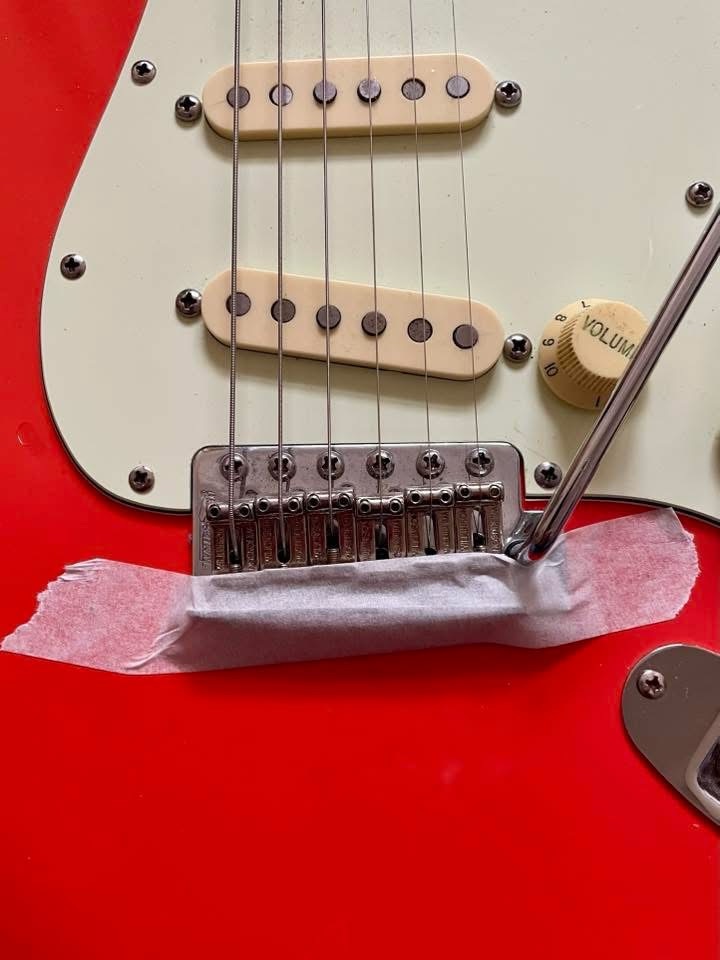
Also, never pull the coiled ends that have been wrapped around the machine heads through the bridge. Always clip the strings about half way along after loosening before removing them.
The key word is maintenance. Keeping guitars in good working order rather than letting them deteriorate until a lot of work needs to be done at once.
A nice job in amongst all this was a lady who has a cheap, and I mean very cheap, classical guitar (from, I believe, one of the German discount supermarkets) which needed quite a bit of work done. Various people had advised her that for the cost of having it repaired she could get a new one, but she would not be moved. Fair enough. The main problem was that the fretboard had twisted at the low frets (nearest the nut) resulting in the frets running downhill on the treble side from the third fret to the nut.
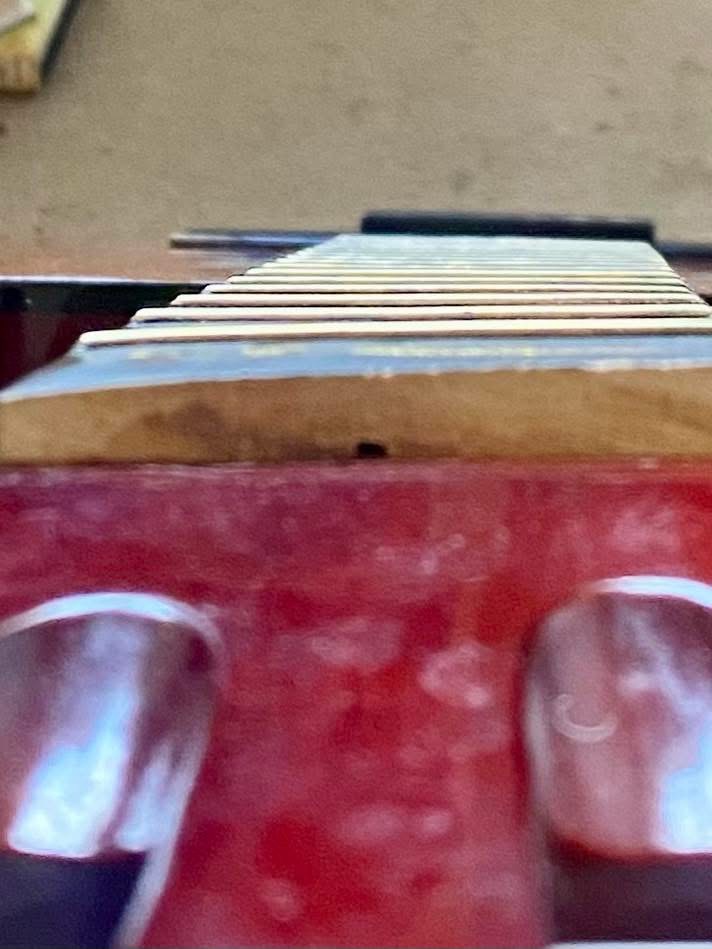
Normally the procedure for this would be to remove the frets, use a plane or sanding beam to level the fretboard, and then refret. As this was a very inexpensive guitar another, less expensive approach had to be taken. I removed the first three frets, sanded off the black paint (it’s a maple fretboard), built up the sunken bit of fretboard with pieces of thin maple veneer, sanded it flat, and repainted the section of fretboard with black acrylic model paint. Then I put the frets back in.
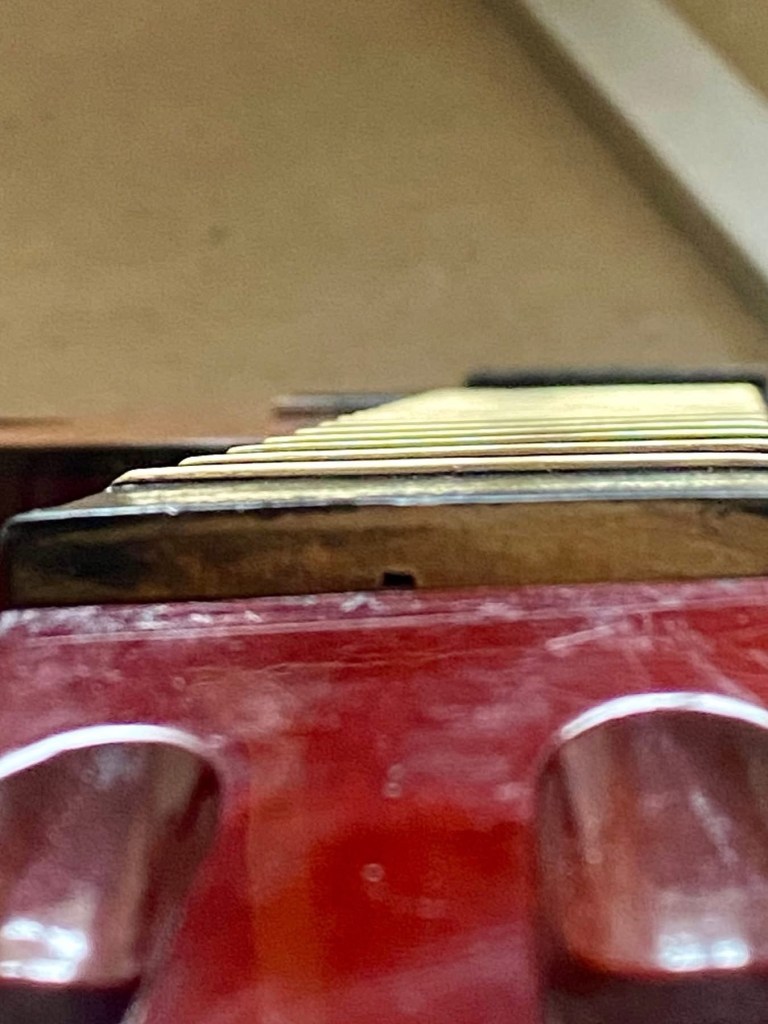
It worked just fine and after a setup and a new set of strings, much to my surprise, this cheap supermarket guitar, which doesn’t even have a solid top, sounded really nice: lovely round bass end, clear trebles, decent volume, and excellent intonation. I understand now why she wanted to hang on to it.


Leave a Reply