While it’s true that the majority of tuning issues with guitars originate with the bridge, some can also be caused by the nut; more specifically, with incorrect placement of the nut. I’m referring to the situation where a guitar has been set up with the action, truss rod, intonation at the 12th fret all adjusted correctly, the frets levelled, and the slots in the nut cut to the correct depth, and yet open chords will not play in tune.
If one of your guitars has this problem, try this: put a capo at the 1st fret and, using an accurate, sensitive tuner or tuner app, tune the guitar (the notes will be F, Bb, Eb, etc.). Try open chords (with the capo still on) and you’ll find that they’ll play in tune (within the confines of equal temperament tuning). Then take the capo off, retune, and play all the strings one at a time at the first four frets. They’ll start off sharp at the 1st fret and will gradually get more in tune as you get to the 4th. If the tests above apply to any of your guitars, then the nut is in the wrong place; it’s too far from the first fret.
Because the strings run up and away from the fretboard at an angle, pushing the strings down to the fretboard causes them to go slightly sharp. Also, the thicker the string the shorter its effective sounding length is. Some compensation is necessary to correct this, which explains why an acoustic saddle is at an angle, and why electric saddles are all in slightly different positions. What is sometimes forgotten is that compensation is also needed at the nut to correct for the fact that, even when the slots are cut as low as possible, the angle from the nut to the first fret is severe enough to cause the strings to go sharp when fretted.
Here’s how I went about fixing this problem on my guitars (I’ve done the same for other people’s guitars as well). I loosen the strings, move them aside, remove the nut and using an unshaped saddle blank with some medium sandpaper attached to it,
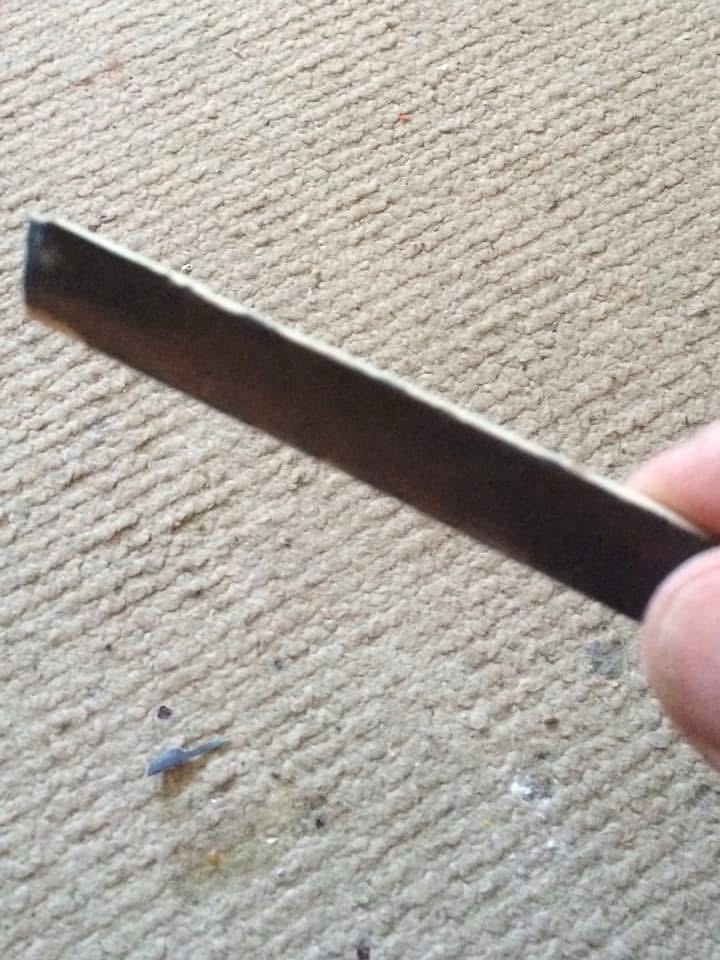
I carefully sand back the end of the fretboard.
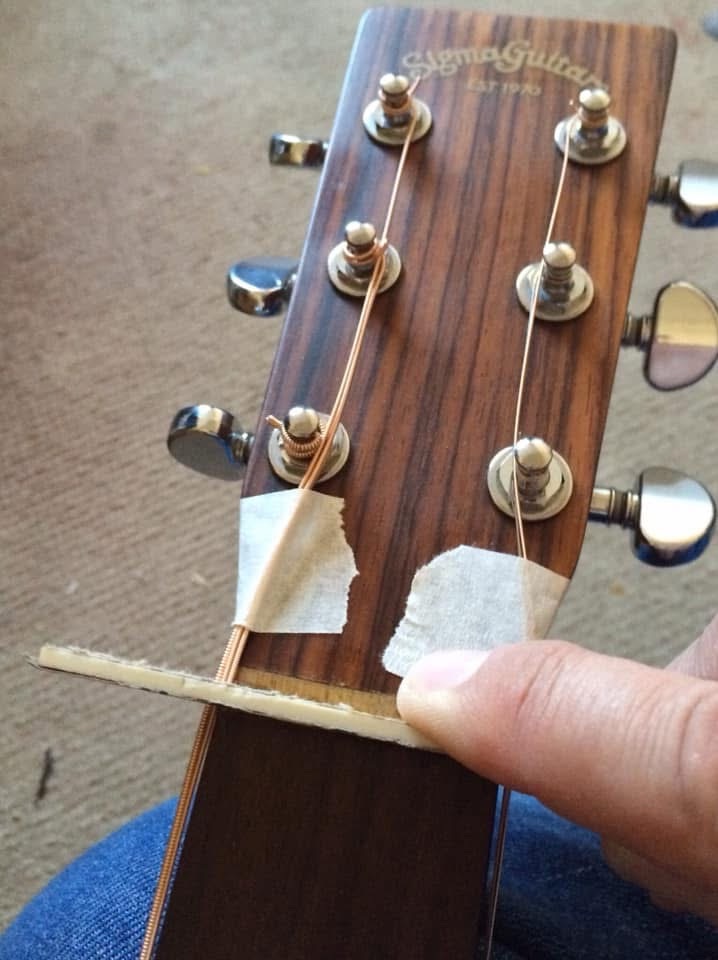
Because the nut slot is now slightly wider, I’ll build up the back of the nut with some superglue and baking powder,
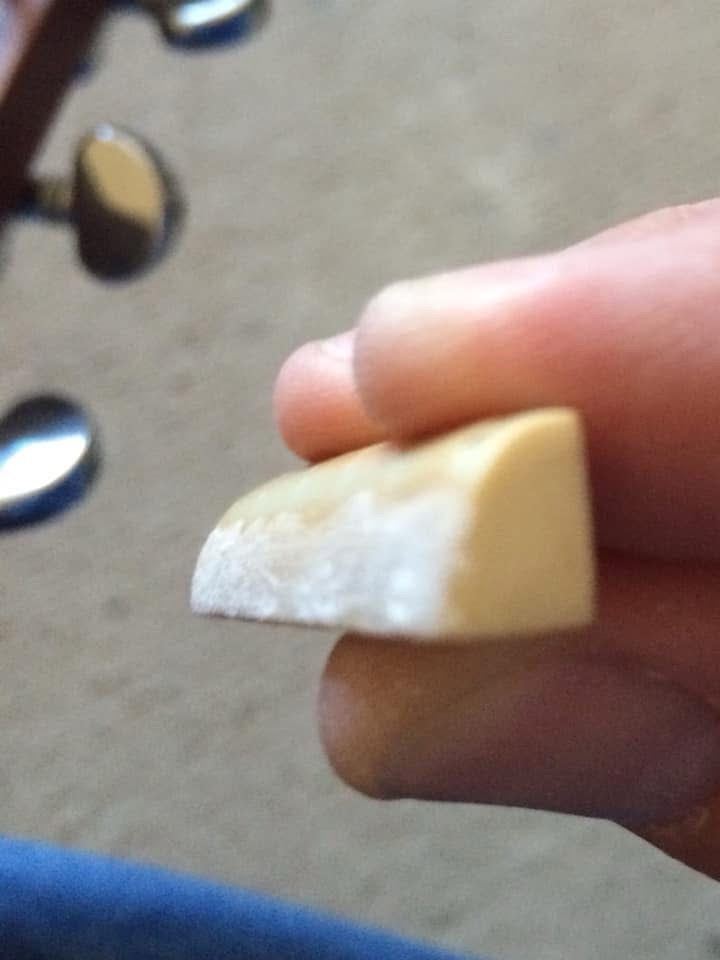
and sand it to fit.
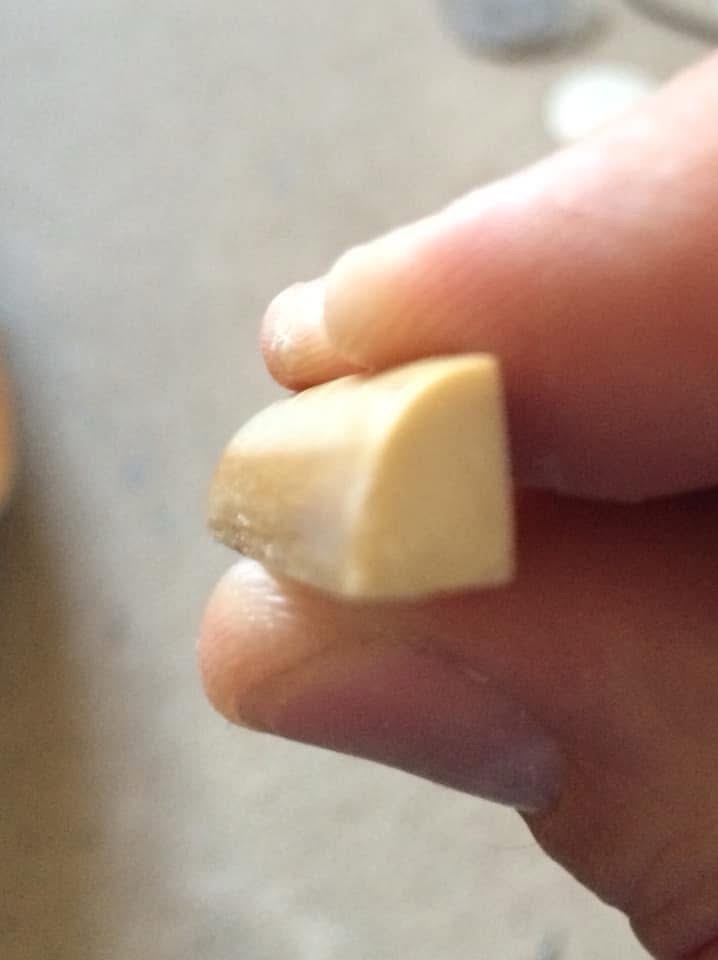
Then I’ll retune the strings and test the intonation at the first three frets (I use a Korg GT-120 for this).
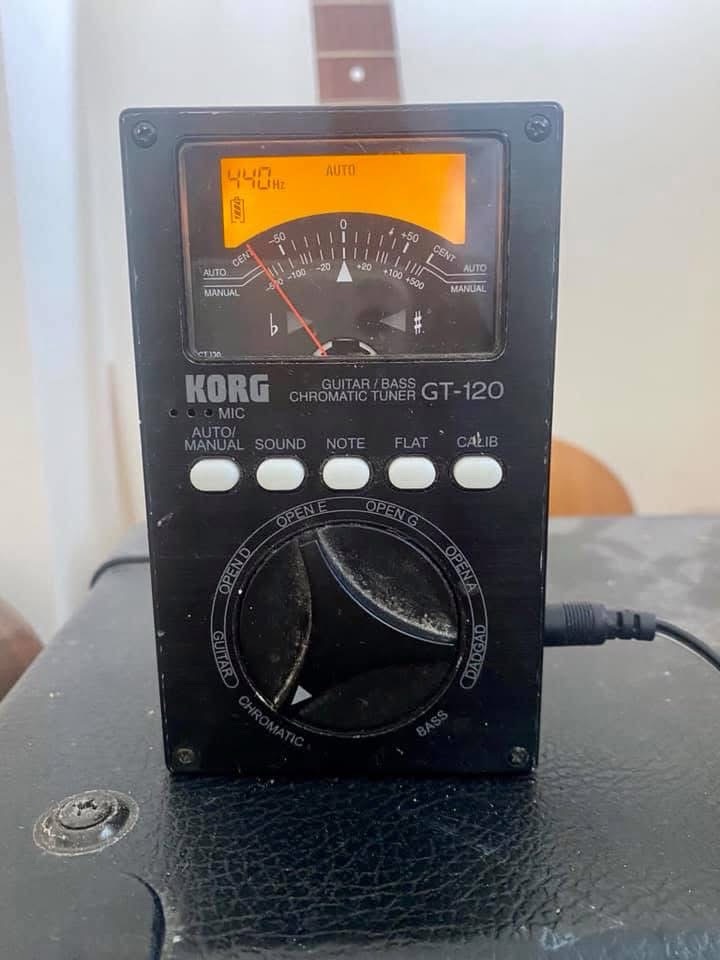
Then I’ll repeat the process until all the notes on all strings at the first three frets are in tune. Occasionally I’ll make a new nut, but usually I’ll just sand and polish the original one with the added material.
This is a time consuming process and it can cost a couple of sets of strings because of the repeated loosening and retuning (I use cheaper strings for this process!), but once it’s done the results are clear: all chords play in tune up and down the fretboard, and using a capo requires no tweaking of tuning.
Usually all you’ll finish up with is a nut that’s a bit wider than when you started but, sometimes you’ll end up with one that isn’t parallel to the frets, as in my Sigma DR12-28.
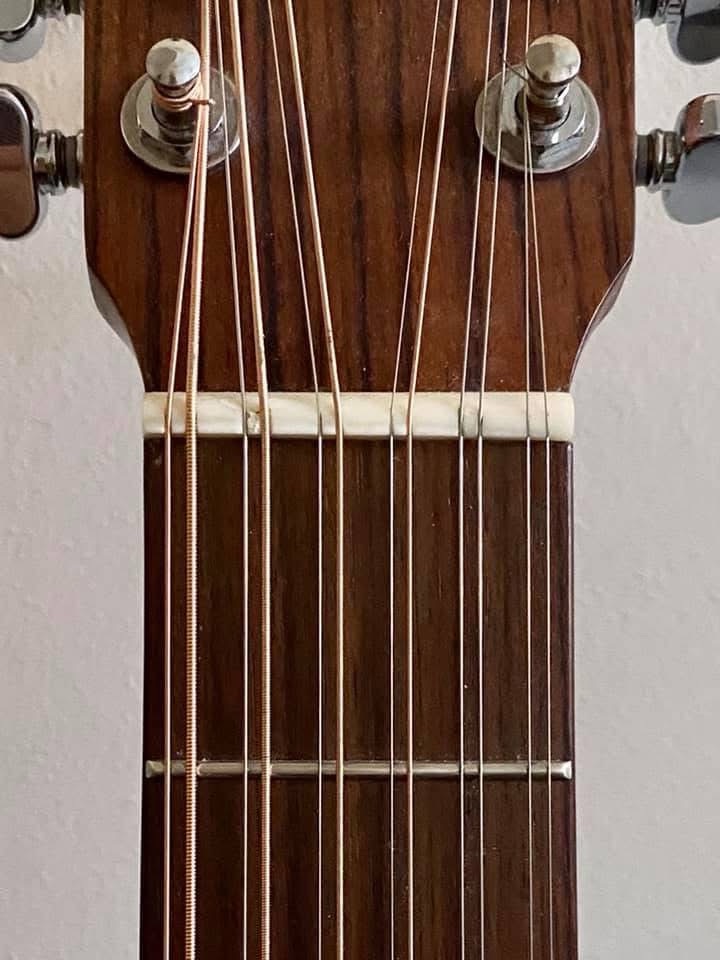
In the picture you can see that the nut is wider at the high strings than at the low ones so that the front edge runs down at an angle from the low to the high strings. Conversely, although it’s a bit harder to see because the effect is less pronounced, on the 335 style guitar the nut is very slightly wider at the low strings, with the front edge of the nut running up an angle from the low to the high strings.
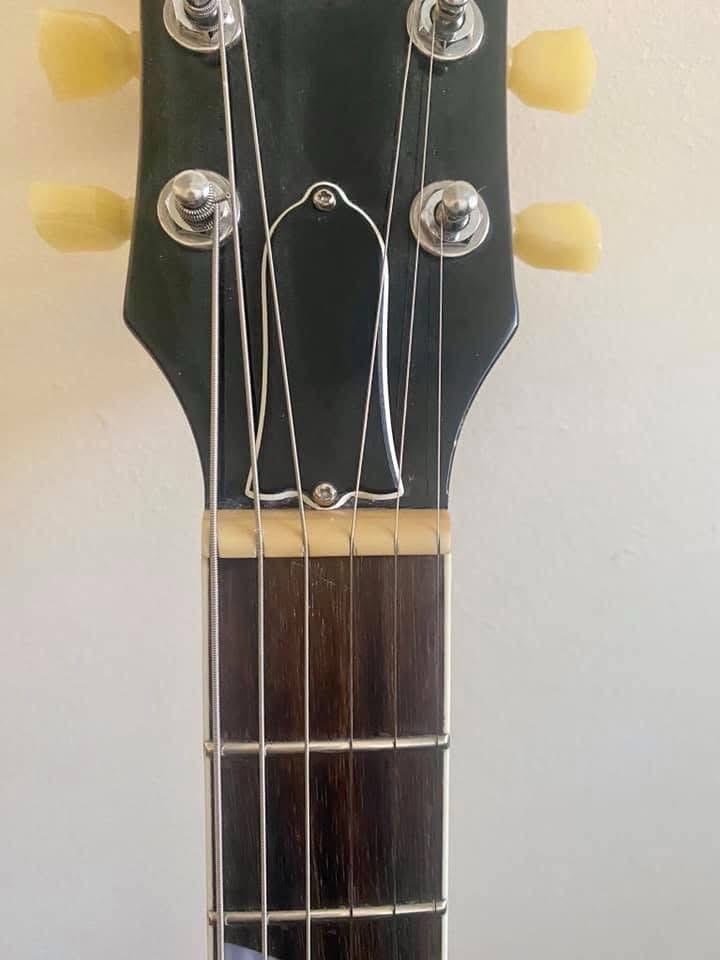
This phenomenon is much less common on guitars made in the last ten years or so, but it can still crop up here and there, and it’s certainly quite common on older guitars, no matter how expensive.


Leave a comment