I’ve known this 2007 Martin D-28 since 2009 because the owner is a friend. I’ve also done some previous work to it. Ten years ago I trimmed the fretboard ro move the nut forward and correct the intonation on the lower frets, made a new nut (the original one had poor string spacing), and installed a new saddle.
A couple of years later I levelled, crowned, and polished the frets. It seemed odd that a high end guitar, with an owner who is by no means a heavy handed player, should have so much fret wear after only a few years, so I had a look at some online guitar forums and, sure enough, there seemed to be a fair amount of other Martin owners who had had a similar experience. Martin, for reasons best known to themselves, have been using soft fret wire on their guitars. The upshot of this is that when I worked on this guitar’s frets again a few years ago I knew that next time a refret would be needed. That time finally arrived.
The frets had worn down to about 0.8mm and were so low that, even though the owner wasn’t finding the guitar particularly difficult to play, too much string and fingertip contact with the ebony fretboard had started to wear grooves in it.
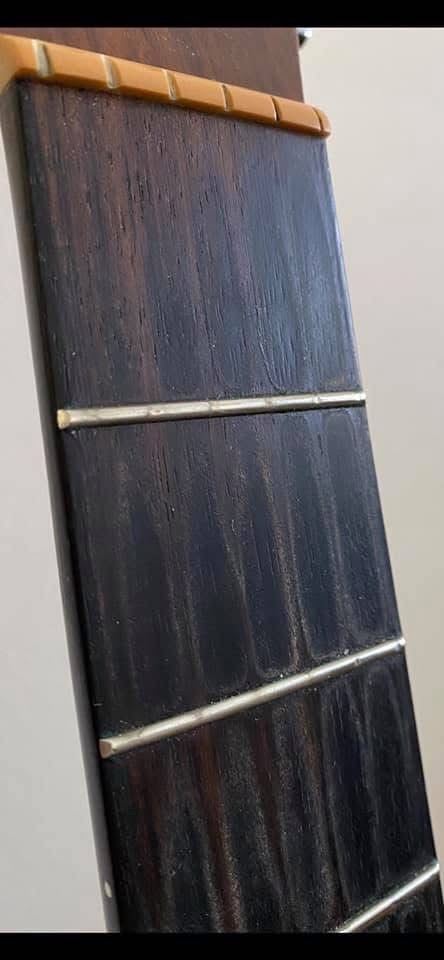
I used a fret levelling beam to sand out the grooves and to level a few high spots on the fretboard.
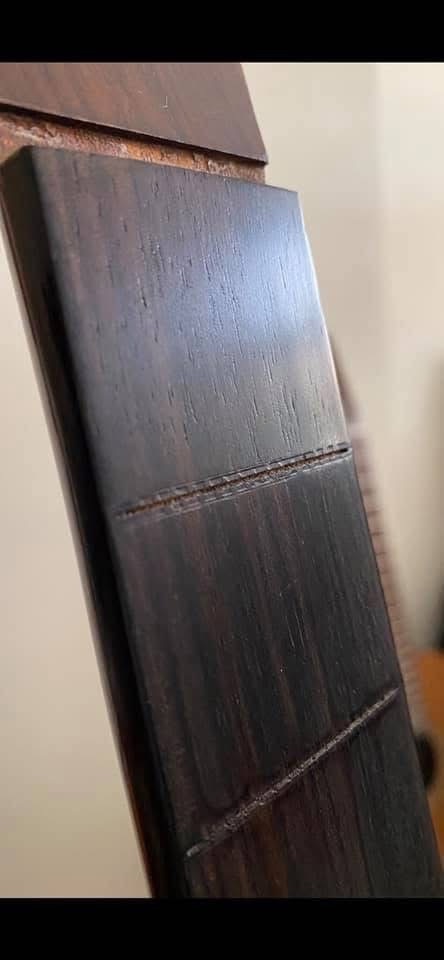
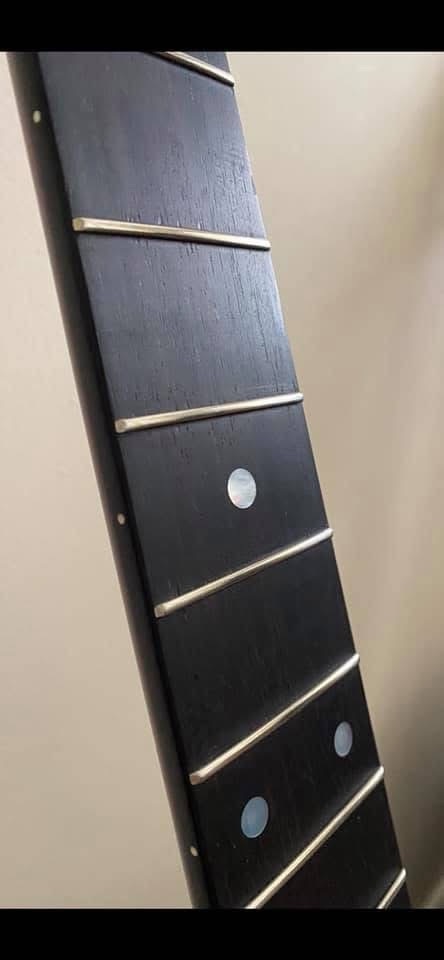
The fret wire I chose was Stewart-MacDonald #155 wire which, at just over 2mm wide is a close match to the original wire. Even when levelled and crowned, this wire is over 1.2mm high and the frets will take a good few dressings before they needs to be replaced. It’s also hard wearing, so they should last for many years.
With the new frets installed the nut and saddle, which had been progressively lowered as the frets had worn down, also needed to be replaced. The ones I made for it a decade ago were GraphTech Tusq, a good quality and popular synthetic ivory, but I thought I’d push the boat out and make these from bone. The saddle was already shaped and compensated for intonation, so it only needed a bit of sanding to make it fit in the slot. I made the nut from a roughly pre-shaped blank and was careful to get the string spacing even.
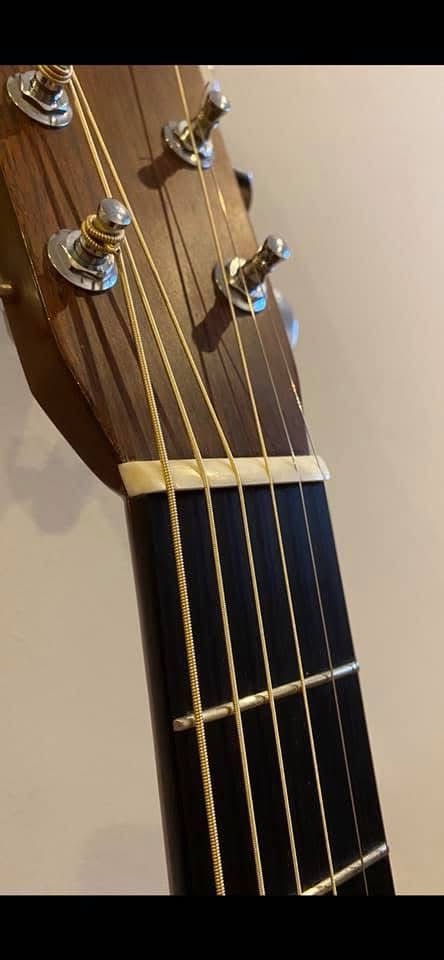
When polished there’s a nice marbling effect in the bone.
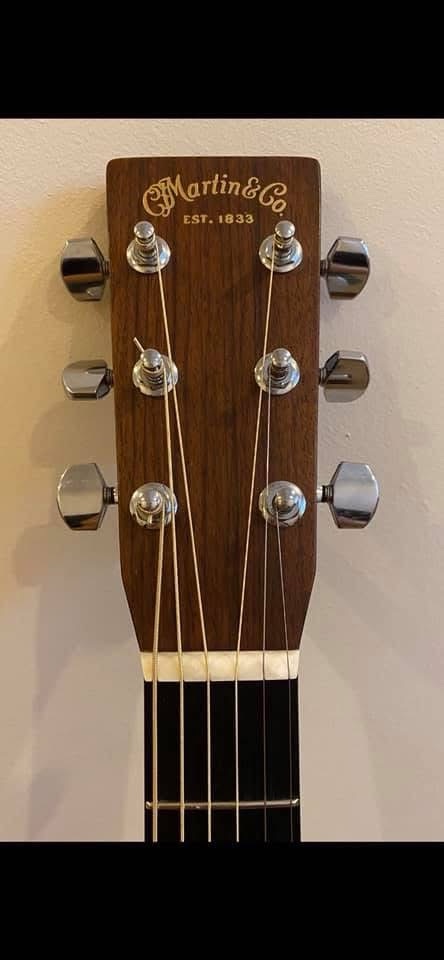
The guitar now plays really comfortably and sounds great, and should do so for many years to come.


Leave a comment