I was brought this 1960s Harmony H75 to work on. The main thing that needed attention was fifty-odd years of fret wear, with the original frets now so low they were virtually unplayable (so much so that the owner had sustained a tendon injury from having to apply too much pressure in order to get the notes to sound cleanly. Let that be a warning!). They were all flat on top with not enough height to get a satisfactory crown, so time for a refret.
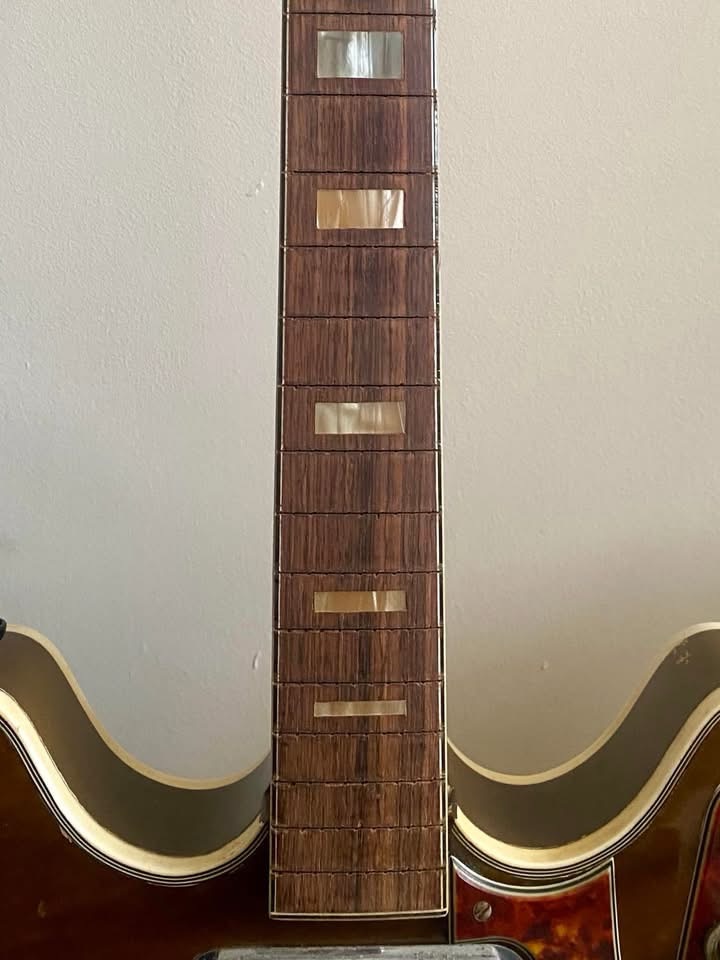
After removing the old frets I could see that the fretboard had a few high spots so I levelled it with a sanding beam. This also had the advantage of removing years of grime and revealing fresh rosewood, which I treated with a bit of lemon oil.
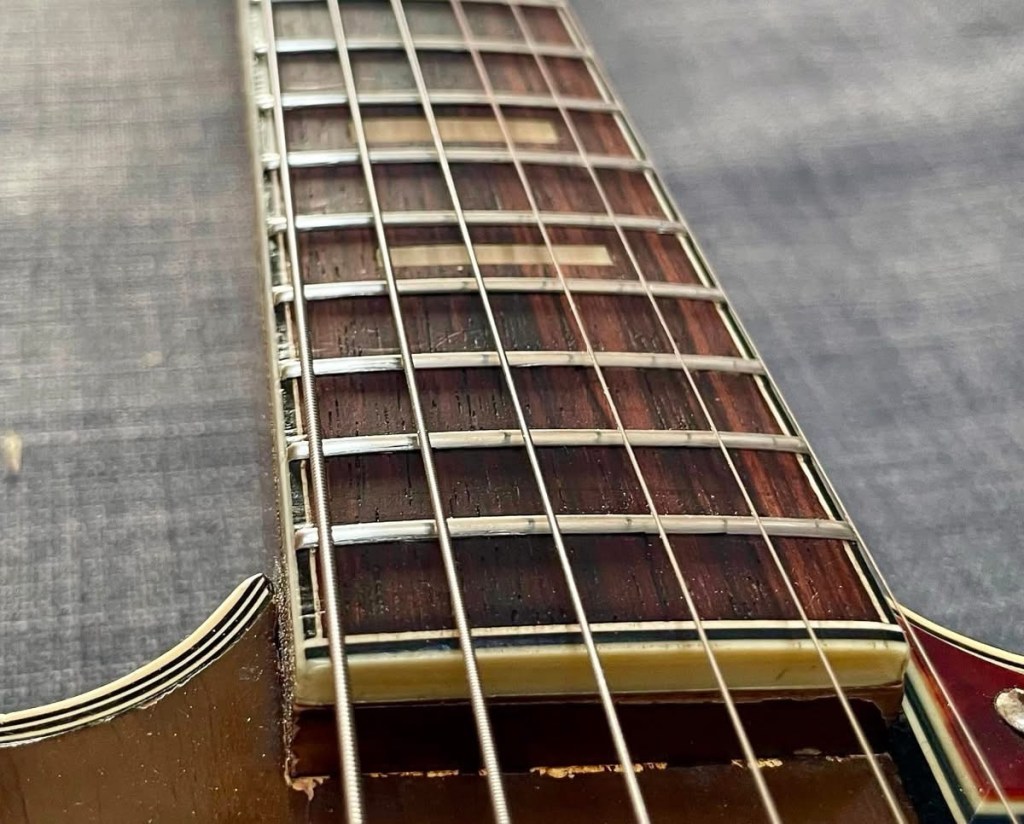
The fretboard was coming loose from the neck towards the headstock at the bass side, so I glued and clamped it, and left it overnight.
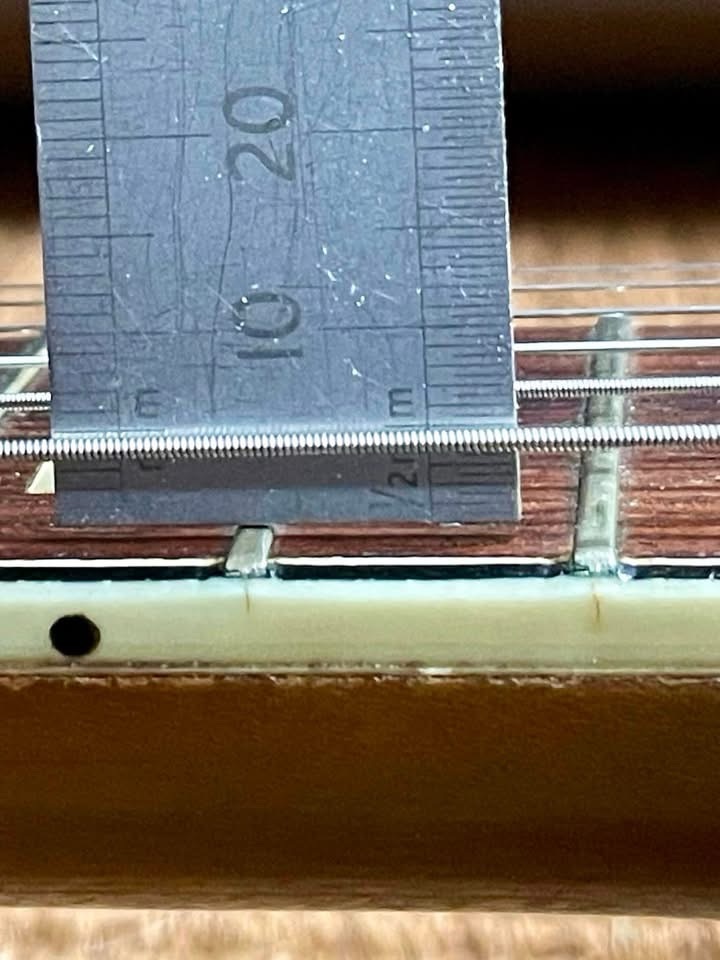
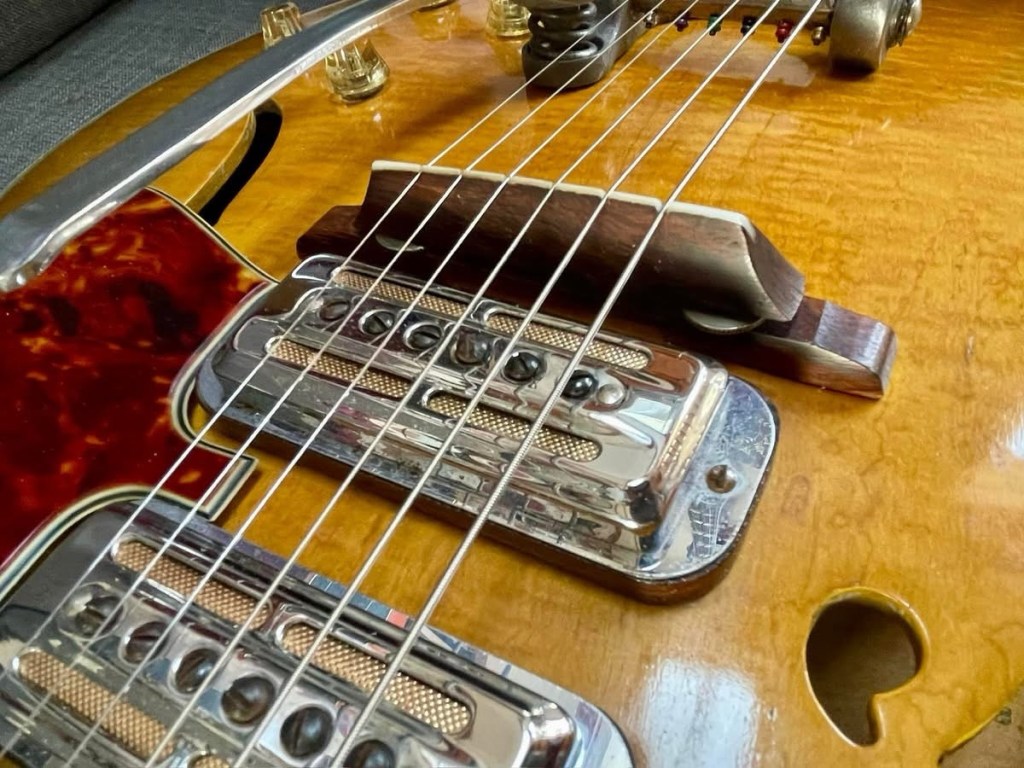
The bolt on neck is really well fitted in the pocket with no play at all, but a shim in the neck pocket at the end of the neck was making the neck angle too steep causing notes to choke at the high frets unless the action was set very high (in this case about 4mm, see first picture). Ultimately, a very thin shim was needed at the opposite end of the pocket to get the angle just right.
Often the type of plastic used on guitars in the ‘50s and ‘60s had a tendency to shrink over time, and this is evident here from the fretboard binding and the overlay on the headstock, both of which have pulled back from the edges of the wood. This doesn’t bother the owner and doesn’t affect the playability of the guitar, so it was left as it was.
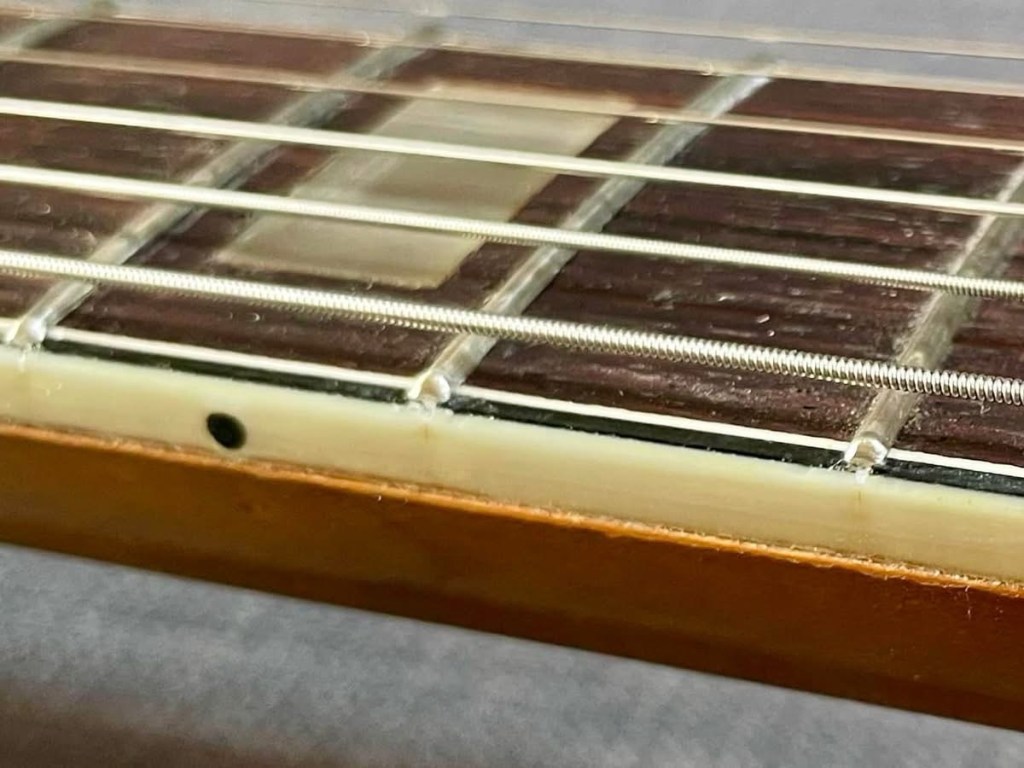
The strings had long since worn through the nylon insert in the floating bridge, but the owner was fine with it, so I adjusted the slots to be closer to the curvature of the fretboard. Once I found the position for the bridge where the intonation was correct, I marked the position with masking tape and secured the bridge in place with very thin double sided tape.
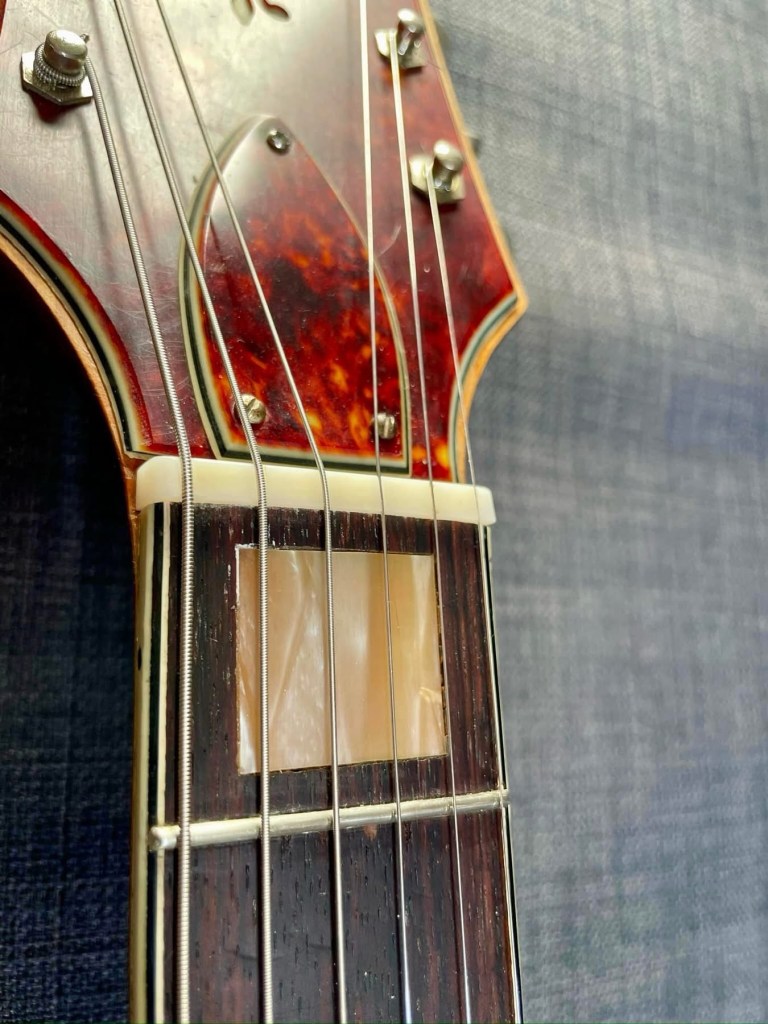
The nut also had to be shimmed slightly to accommodate the greater fret height.
All that was left to do was to restring the guitar and adjust the pickup polepieces for a balanced output. The DeArmond Gold Foil pickups sound full and clear, and with an on/off switch for each unit, a wide variety of sounds can be obtained.
The owner plays mainly rhythm guitar, so we went for a set of Elixir Optiweb strings, gauges 11- 49, and an action of 1.5mm at the 12th fret for the high E string and 2.2mm for the low E string. With this setup the guitar plays comfortably and cleanly and, with the new frets, the owner will be far less likely to sustain any more tendon injuries.


Leave a comment