Here’s a good example of what can need done to a guitar when it’s brand new. This gentleman bought a Gibson Slash J-45 November Burst and brought it for a setup.
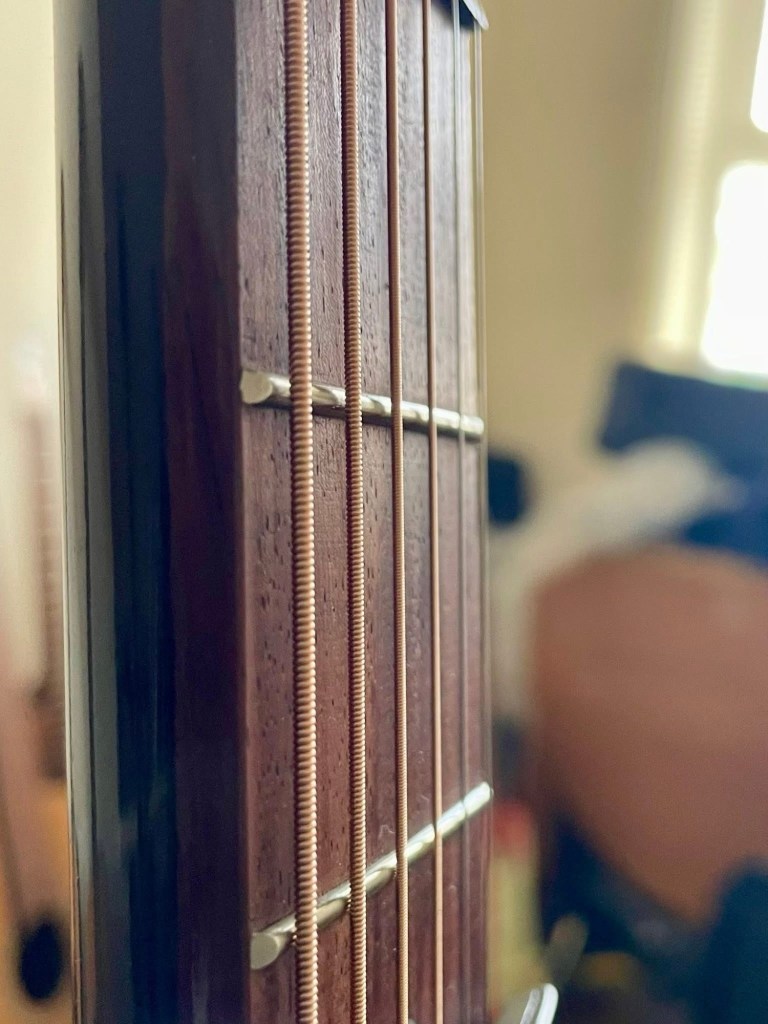
The string height at the 1st fret, which is governed by the nut, was 0.028” (0.71mm) for the low E string and 0.024” (0.61mm) for the high E string. Ideally, if you put a capo at the 3rd fret the strings should just pass over the top of the 1st fret, getting slightly higher towards the low E string. As you can see from the first picture, this was not the case, and the outer strings were slightly higher than the inner ones, which means the radius of the strings at the nut had been cut flatter than the radius of the fretboard.
The action measured at the 12th fret was 2.6mm at the low E string and 2.1mm at the high E string. Like the nut, the saddle’s radius was flatter than the fretboard. Neck relief, measured by capoing at the 1st fret, pressing the low E string down at the 15th fret and using a feeler gauge at the 7th fret was 0.010” (0.25mm).
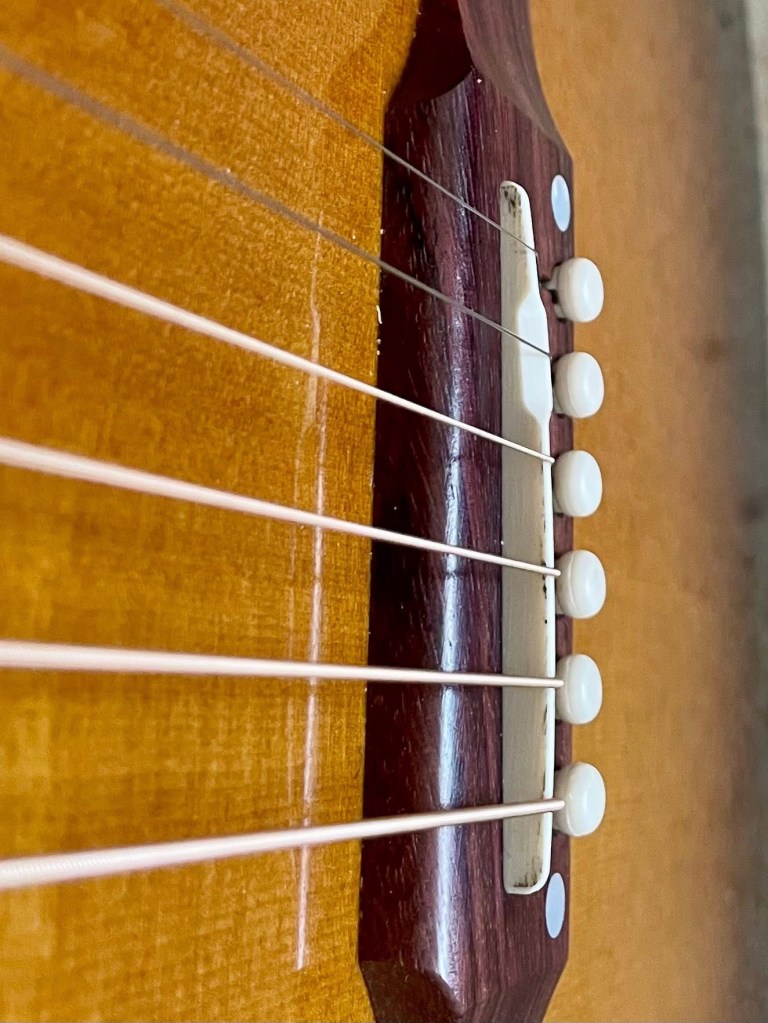
This was all a bit to high to make for comfortable playing but, oddly enough, was a near perfect setup for slide playing: strings high and flat enough at the bridge and nut and with enough relief for clean sliding, but not so high that playing chords would be too uncomfortable.
All of which made me wonder; was this a deliberate choice by Gibson? If it was it was a sensible one. If the guitar came perfectly set up for standard playing it would be unsuitable for slide playing, and removing material from the bridge and nut is easier than adding it, so it gives the owner options.
Well, this owner wanted it to play more comfortably and, as I know he’s not a heavy handed player, I knew it could end up nice and sleek and easy to play.
I knew that 0.010” neck relief would feel a little spongy in the middle of the neck, so I reduced it to 0.008”. It seems odd that such a small adjustment should make a difference to how the guitar feels, but it does. Next, I removed the nut and sanded the bottom so that the middle two strings were just higher than I wanted. After adjusting the action at the saddle I’d come back and make final adjustments to the nut.
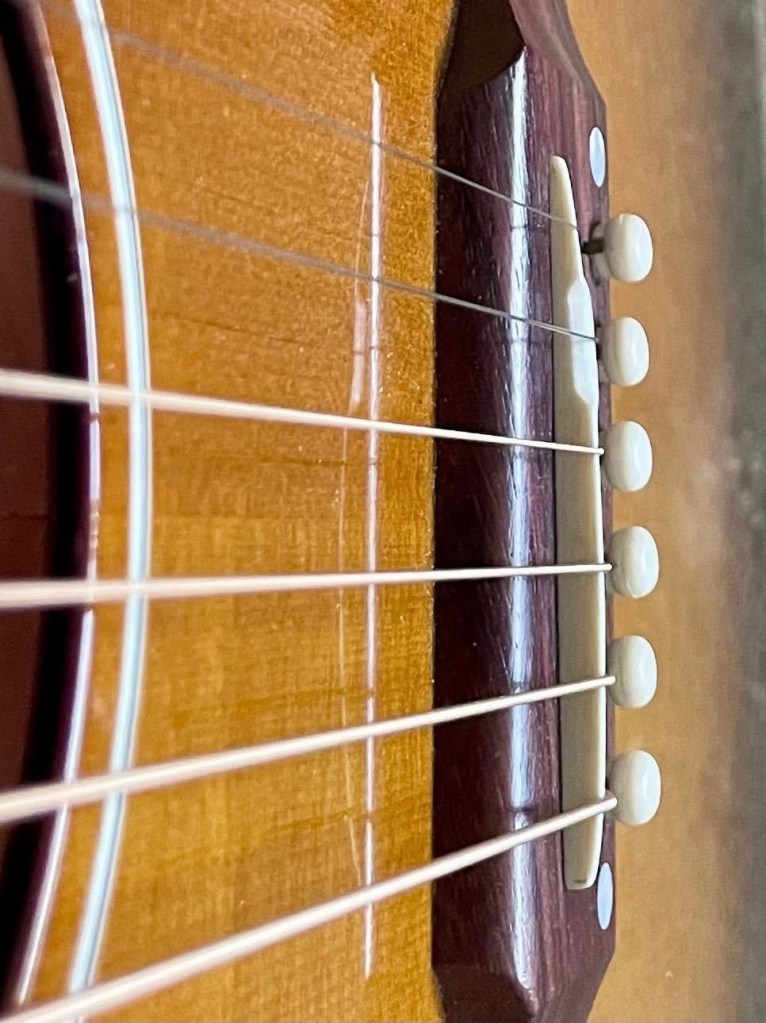
I used a Stanley knife blade to reshape the top of the saddle, bringing the two low strings and two high strings down a little so that it more closely matched the radius of the fretboard. After this was done the bottom of the saddle didn’t need sanding down much at all.
The frets were pretty good with only a few that needed a little levelling. The fret ends were a bit sharp, though,
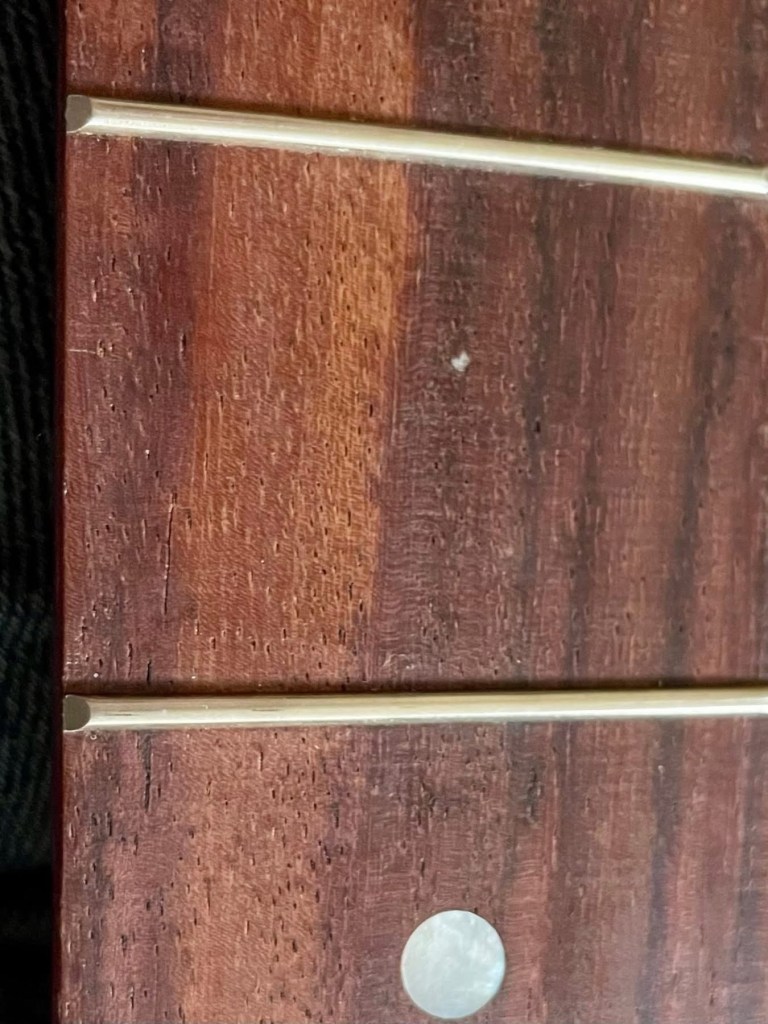
so I rounded them over.
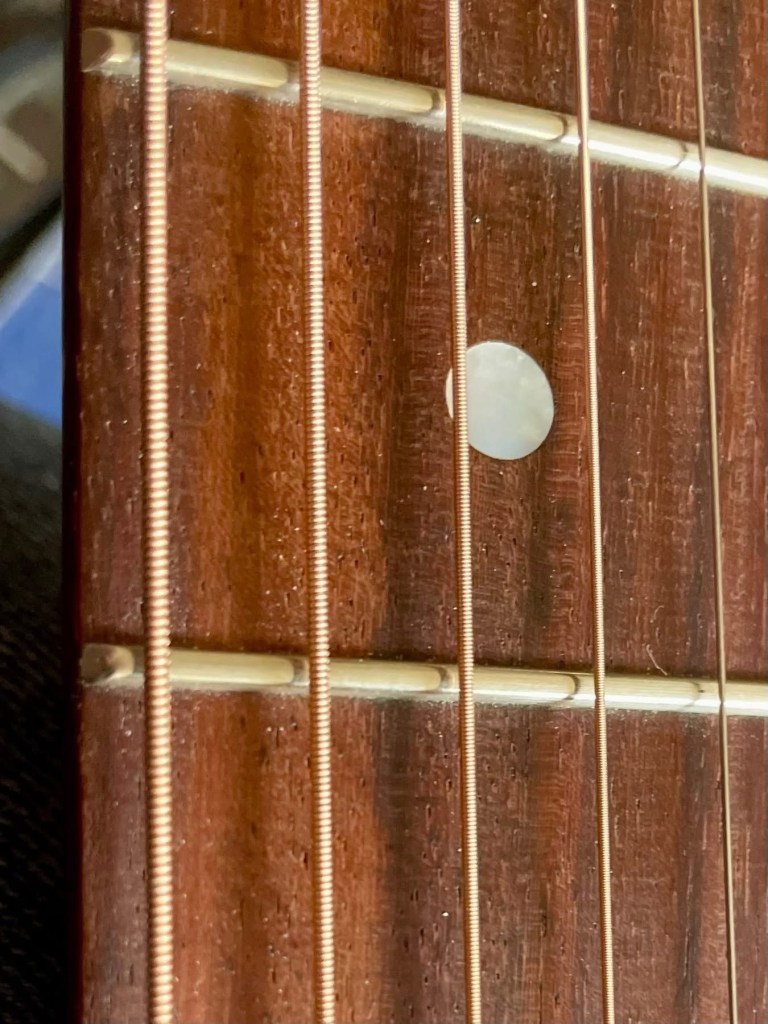
Once everything was done the measurements were: neck relief 0.008” (0.2mm). String height at first fret 0.018” (0.46mm) for the Low E, and 0.014” (0.36mm) for the high E. As you can see from the picture below, with a capo at the 3rd fret the strings are closer to the fret meaning first position chords will be more comfortable to play.
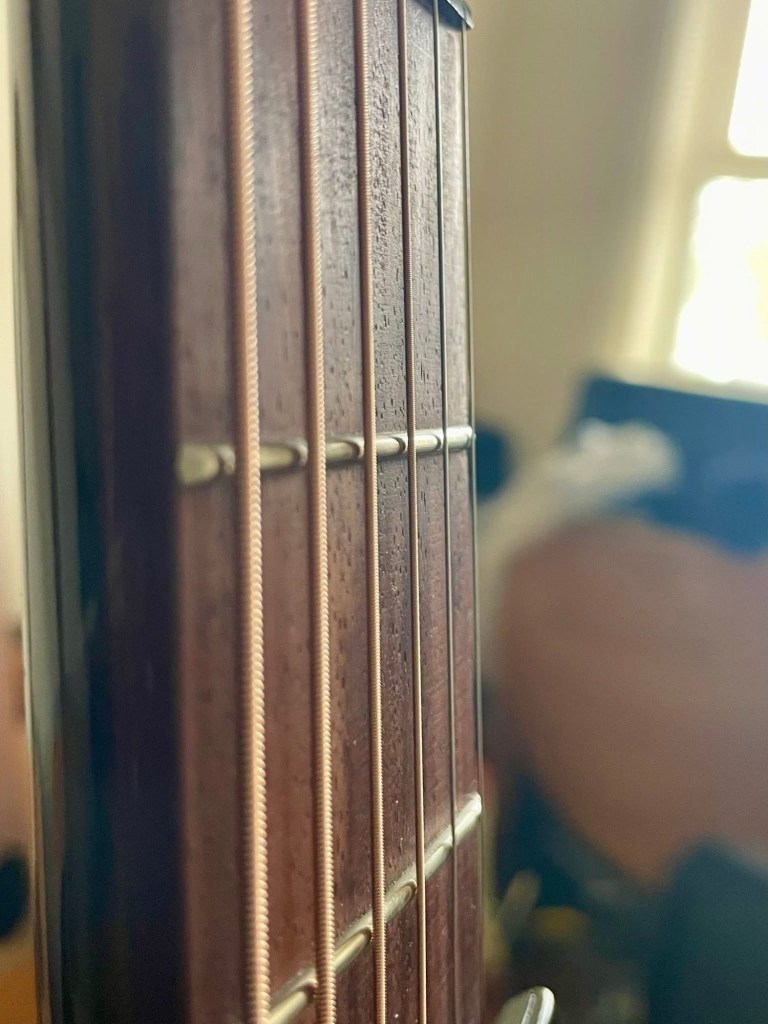
Action at the 12th fret is now 2.1mm for the low E string and 1.6mm for high E.


Leave a comment